
Spectroscopy
about 1 year ago
Earle K. Plyler: Setting the Standard in Infrared SpectroscopyLatest Content
Sep 08, 2026 | News
Highlights from What’s Nu August 2026
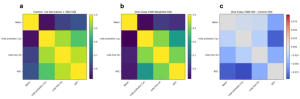
CNN-Enhanced Hybrid Spectral Comparison Using HQI in a Learned Feature Space
Sep 07, 2026
Pathways in Spectroscopy: Pursuing a Career as a Space Scientist
Sep 07, 2026
Advising Trade Commissions and Establishing Global Credibility
Sep 04, 2026
Best of the Week: the James L. Waters Symposium, Remembering Peter Griffiths
Sep 04, 2026




Advertisement
Shorts
1:26
Pursuing a Career as a Space Scientist
a day ago
by
Pavithraa Sundararajan
0:39
Best of the Week: the James L. Waters Symposium, Remembering Peter Griffiths
4 days ago
by
Will Wetzel
0:28
Previewing the Spectrum of Perspectives Dessert Social
5 days ago
by
Will Wetzel
0:41
An Inside Look at Polycyclic Aromatic Hydrocarbons
6 days ago
by
Pavithraa Sundararajan
0:58
The Methods Transforming Forensic Science
7 days ago
by
Tom Spudich
0:43
Best of the Week: Bioprocess Monitoring, Rewriting Atomic Spectroscopy
11 days ago
by
Will Wetzel
0:44
Previewing Episode 3
12 days ago
by
Will Wetzel
1:19
Analyzing Microplastics and Titanium Oxide Nanoparticles
13 days ago
by
David Clases
1:31
What Multimodal Approaches Unlock in Microplastic Analysis
14 days ago
by
David Clases
0:32
The Upcoming ICORS 2026 Social Event
14 days ago
by
Spectroscopy Staff
When Political Appointees Outrank Peer Review
How a New Office of Management and Budget Rule Could Reshape Spectroscopy and Scientific Research Funding
Spectroscopy Top 10 Articles of the Month
An Inside Look at the Best of June 2026
Back to Basics
Analyzing the State of Forensic Science in 2026
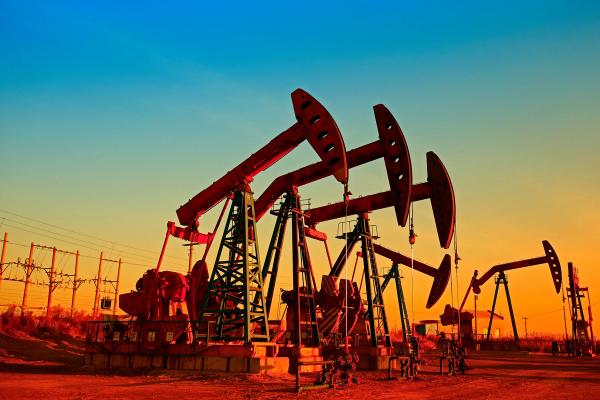
What Spectroscopic Techniques Are Used in Modern Oil Refining?
An Inside Look
What Are Some of the Keynote Events Set to Take Place at the ACS Fall 2026 Meeting?
An Inside Look

Podcasts
Videos


All Content
Advertisement
Advertisement
A new peer-reviewed article discusses how pairing quantum mechanics with nanomaterial-based Raman spectroscopy has significantly boosted the technique's sensitivity.
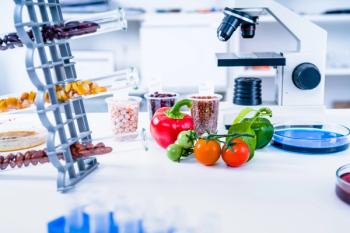
This video clip addresses the current skills gaps that are being seen in the food industry.
The nomination deadline for the 2027 EAS Chemometrics Award, which recognizes significant and lasting contributions to chemometrics, has been extended to September 15, 2026.

John Philip Walters, Ph.D. (1938-2026), was an analytical chemist who spent 17 years researching the physics of spark-discharge emission spectroscopy at the University of Wisconsin-Madison before moving to St. Olaf College in 1982, where he became best known for pioneering a role-playing undergraduate laboratory model that had students take on professional roles to mirror real analytical-chemistry work. His 1991 three-part series on the approach in Analytical Chemistry earned him the ACS Division of Analytical Chemistry's J. Calvin Giddings Award in 1993, and he continued extending his understand-the-system teaching philosophy into computer-controlled instrumentation well into his later career.
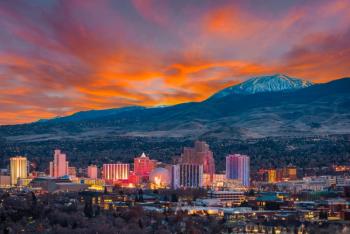
The SciX 2026 Conference returns to Sparks, Nevada, this year. Here's what attendees can expect.
What is the one thing scientists often struggle with that holds them back in their careers? According to Kantha Shelke, Principal of Corvus Blue LLC and Senior Lecturer at Johns Hopkins University, scientists need to translate science into a language that resonates with non-scientific audiences.

Is confidence just a glorified attitude adjustment? In this interview segment, Kantha Shelke, Principal of Corvus Blue LLC and Senior Lecturer at Johns Hopkins University, answers this question.
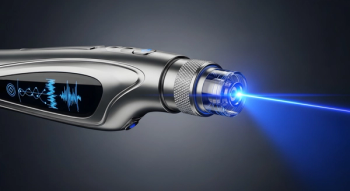
Raman spectroscopy is shedding its bulky, benchtop reputation as chip-scale spectrometers, tip-enhanced probes, and AI-native detectors push the technique into pockets, production lines, and single molecules. The result is an instrument category being rebuilt from the optics up, faster, smaller, deeper, and smarter than the Raman systems of even five years ago.
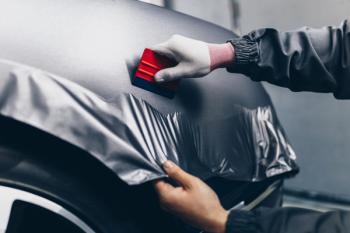
Researchers have developed a new validated attenuated total reflectance Fourier transform infrared (ATR-FTIR) and Raman spectroscopy framework for forensically distinguishing automotive vinyl wraps by manufacturer, color, and finish.
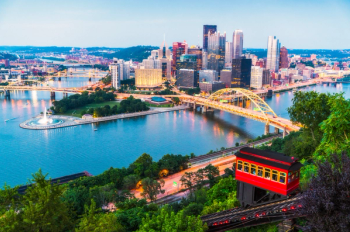
A History of The James L. Waters Symposium: Innovators, Instrumentation, and Applications, 1989-2026
A history of the James L. Waters Symposium at Pittcon, from its 1987 origins and its founder, instrument entrepreneur James Logan Waters, through thirty-six installments of speakers spanning gas chromatography to generative AI.
Advertisement
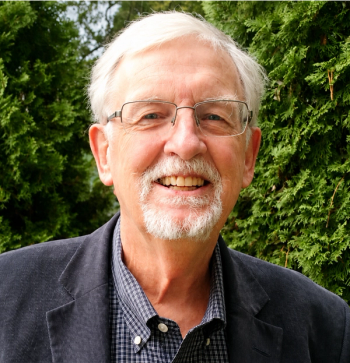
Peter R. Griffiths, a pioneering figure in Fourier transform infrared (FT-IR) spectroscopy who authored or coauthored more than 300 scientific papers and numerous books over five decades, died August 29, 2026, at age 84. This tribute traces his career from Oxford and Digilab through Ohio University and the University of Idaho, his landmark books and the Handbook of Vibrational Spectroscopy, and his many honors, including the 2023 Ellis R. Lippincott Award and 2024 Optica Fellowship.

Pursuing a career outside of corporate life requires taking risks. In this interview segment, Kantha Shelke, Principal of Corvus Blue LLC and Senior Lecturer at Johns Hopkins University, details some of these risks.
Top content published this week include a new article on bioprocess monitoring, a new “Chemometrics in Spectroscopy” column, and an overview of the latest advancements in laser-induced breakdown spectroscopy (LIBS).

A recent study presented a new system for testing metal contamination on microplastics.
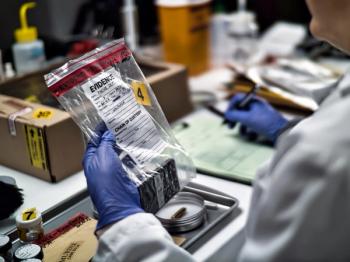
A recent review article examines how AI-assisted spectroscopic tools are propelling forensic trace evidence analysis forward.
Advertisement
Advertisement
Trending on Spectroscopy Online
1
CNN-Enhanced Hybrid Spectral Comparison Using HQI in a Learned Feature Space
2
Pathways in Spectroscopy: Pursuing a Career as a Space Scientist
3
How is Raman Spectroscopy Being Used in Life Science Applications?
4
Advising Trade Commissions and Establishing Global Credibility
5