|Webcasts|March 26, 2020

Editors’ Series: Limiting Laboratory Exposure: A Chemist’s Guide to the COVID-19 Outbreak

This webcast will talk about the fundaments of a biological viral outbreak and discuss common and uncommon laboratory techniques that will limit spread and combat contamination. Live: Thursday, Mar. 26, 2020 at 1pm EDT | 12pm CDT | 10am PDT On demand available after final airing Mar. 26, 2021 Register free

Register free: https://www.cannabissciencetech.com/cst_w/COVID-19

Event Overview:

Many chemists and scientists are considered essential personnel during the COVID-19 outbreak.  While many chemists understand the nature of clean lab techniques, they might not be aware of how these techniques will protect them from a biological contamination risk. This webcast will talk about the fundaments of a biological viral outbreak and discuss common and uncommon laboratory techniques that will limit spread and combat contamination. We will discuss additional points of protection and laboratory practices that can be enacted to ensure a higher degree of cleanliness. We will also talk about the inevitable result of potential chemical contamination, which can result, with the increased application of chemicals for biological protection.

Key Learning Objectives:

  • Review of common laboratory cleanliness practices and how they can be increased or changed to also combat biological agents

  • Discussion of the biology and virology involved of the current outbreak to the chemical community which has some knowledge of the process but does not see biology as part of their expertise

  • Highlight where biological controls may contribute unfortunate chemical contamination to their analysis so that the community can be aware and minimize disruption to their work

Speakers: Patricia Atkins, Senior Application Scientist, SPEX CertiPrep

Rebekah Biermann, Territory Sales Manager, SPEX CertiPrep

Time and Date: Thursday, Mar. 26, 2020 at 1pm EDT | 12pm CDT | 10am PDT

On demand available after airing until Mar. 26, 2020.

Sponsors: MilliporeSigma, the life science business of Merck KGaA, Darmstadt, Germany

SPEX CertiPrep

Register free: https://www.cannabissciencetech.com/cst_w/COVID-19


Related to this article

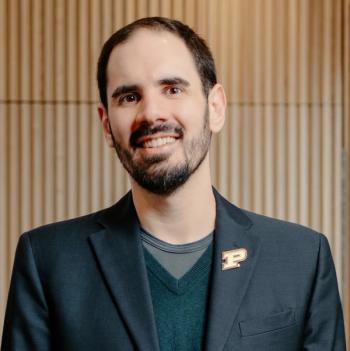
Brandon E. Boor is the Dr. Margery E. Hoffman Associate Professor in the Lyles School of Civil and Construction Engineering at Purdue University. | Photo Credit: © Brandon Boor.
In the second part of our interview with Brandon Boor of Purdue University, he discusses how his team controls experimental variables during cleaning experiments in order to obtain interpretable data.
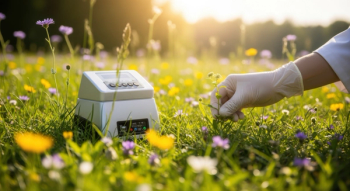
Scientist With Portable Spectrometer in Natural Field Setting ©  By Tika -chronicles-stock.adobe.com
The bulky bench-top NIR spectrometer is quietly being dismantled and rebuilt as a wafer-scale photonic chip, a self-calibrating algorithm, and a sensor small enough to ride in a shirt pocket. What once demanded a grating, a moving mirror, and a climate-controlled lab now fits inside a handheld module, a bioreactor probe, or a drone payload, and it increasingly figures out what it is looking at on its own.
Sizing Up the Nanoscale: Measuring Nanocluster Aerosol in Indoor Air
In the first part of a multi-part Q&A, Brandon Boor, the Dr. Margery E. Hoffman Associate Professor in the Lyles School of Civil and Construction Engineering at Purdue University, describes the instrumentation and methodology behind measuring nanoparticle size distributions at the nanocluster scale (1–3 nm) and outlines the technical challenges of acquiring reliable, real-time data at these dimensions.