
Spectroscopy
about 1 year ago
Earle K. Plyler: Setting the Standard in Infrared SpectroscopyLatest Content
Oct 26, 2026 | Feature
The Color of Discovery: UV-vis Spectroscopy from Nobel-Winning Quantum Dots to AI-Driven Process Analyzers
Pathways in Spectroscopy: Addressing the Gap in Spectroscopy Education
Oct 26, 2026
Best of the Week: Can Spectroscopy Be Compared to Baseball?
Oct 23, 2026

Jürgen Popp on Bringing Optical Twins Into Everyday Healthcare
Oct 23, 2026

Machine Learning Speeds Analysis and Design in All-Atom Molecular Dynamics Simulations
Oct 23, 2026






Advertisement
Shorts
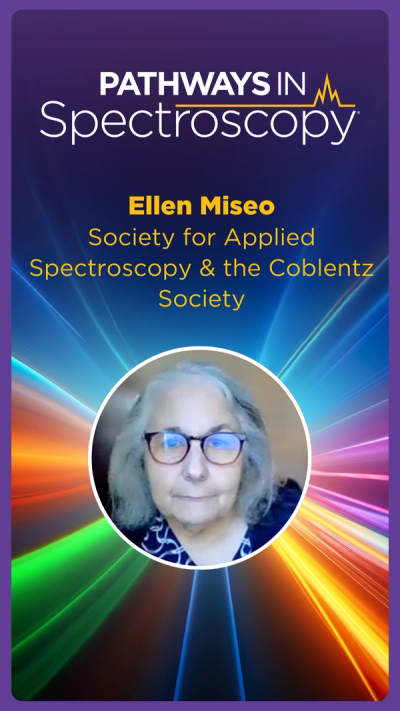
1:32
The Current Education Gap in Spectroscopy
19 hours ago
by
Ellen V. Miseo
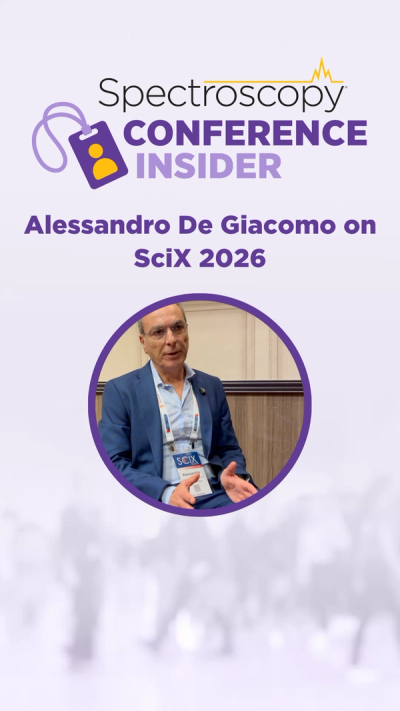
1:09
Alessandro De Giacomo on Why Laser Ablation Is Ready for Advanced Applications
5 days ago
by
Alessandro De Giacomo
1:21
Winning the 2026 Ellis R. Lippincott Award
5 days ago
by
Jürgen Popp
0:52
Translating Chemical Bond Imaging Toward Disease Diagnosis
7 days ago
by
Ji-Xin Cheng
1:03
Two Factors to Consider When Pushing Advances in Raman Imaging for Commercialization
8 days ago
by
Ji-Xin Cheng
0:32
Best of the Week: Where is Raman Heading and More Highlights from SciX 2026
11 days ago
by
Will Wetzel
1:06
Less Experts, More Generalists
13 days ago
by
Peter J. Larkin
1:34
Accidentally Discovering a Breakthrough in Coherent Raman Microscopy
14 days ago
by
Ji-Xin Cheng
1:12
Establishing Global Credibility
15 days ago
by
Kantha Shelke
1:01
Detecting Microcalcifications Through Wax at Varying Depths Using Deep Low-frequency Raman
18 days ago
by
Sara Miller
What is SpecAcademy and What Need Does It Fill?
A Panel Discussion Featuring Five SpecAcademy Instructors

The Mismatch Between Education and Industry
A Panel Discussion With Five SpecAcademy Instructors
The Ongoing Decline of Spectroscopy Expertise
An Inside Look at SpecAcademy

Navigating the Latest Trends and Advancements in Forensic Analysis
An Inside Look
Making Spectroscopy Training More Accessible
How Has Spectroscopy Education Evolved?

Podcasts
Videos





All Content
Advertisement
Advertisement

In his SciX interview, Marc Porter discusses what happens to hydrogen when thiols bind to gold, how close analytical chemists can get to detecting a single molecule in a liter, and his new PFAS-focused startup.
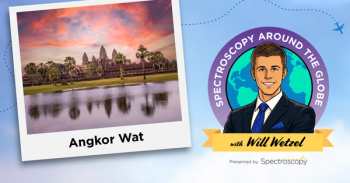
From quarry fingerprints to bat-driven salt damage and hidden wall paintings, portable X-ray fluorescence, Raman spectroscopy, and isotope analysis are revealing how Angkor Wat was built and what threatens it today.

Yukihiro Ozaki of Kwansei Gakuin University received the Raman Lifetime Award at ICORS 2026 in Istanbul for outstanding lifetime contributions to Raman spectroscopy.

At SciX, Alessandro De Giacomo explained how airborne LIBS can produce quantitative results. Instead of relying on reference measurements, the method draws calibration directly from the measured signal, which sidesteps the drone’s positioning and motion problems.

At SciX, Jürgen Popp explains how miniaturized optical spectroscopy could add molecular data to wearable health tracking, which could enable earlier disease detection and a shift toward prevention.
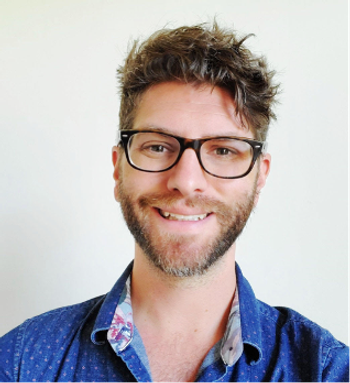
At SciX, Jay Kitt describes the experiment he ran on his own that launched his cytochrome c research, and explains why putting a number on peptide–lipid interactions matters.
The following articles are the most accessed digital object identifier (DOI) manuscripts for Spectroscopy and LCGC International during the month of September 2026. Nine articles are individually ranked here by DOI page views; the third-highest entry (186 views) was recorded against the bare journal-level DOI rather than an individual article and is therefore not attributable to a single manuscript.

Jürgen Popp explains how head and neck surgeons in Jena use a Raman probe to locate tumor borders, why the technique could replace frozen section biopsies, and why optical tools must adapt to clinical workflows rather than the other way around.
Spectral Frontiers
Near-infrared (NIR) spectroscopy, built on the weak overtone and combination-band absorptions first exploited commercially in the 1970s, is now being reshaped by chip-scale MEMS sensors, rapid field calibration methods, and increasingly capable chemometric and machine-learning models.
Atomic Perspectives
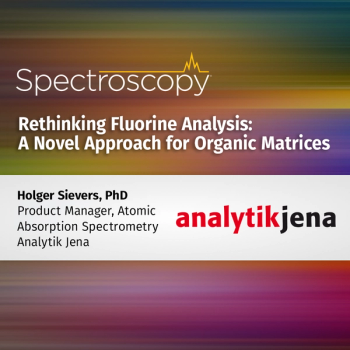
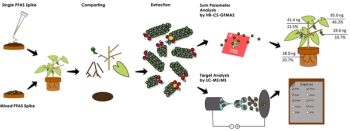
This Atomic Perspectives column explains how high-resolution continuum source graphite furnace molecular absorption spectrometry (HR-CS-GFMAS) quantifies extractable organic fluorine (EOF) as a PFAS sum parameter, complementing LC-MS/MS target analysis, with applications to German river sediments, bean plants, and fluorinated polymer sealing materials.
Advertisement

At SciX, Marc Porter explains how a Thanksgiving batting lesson led him to compare a bat meeting a ball to light scattering off a molecule, and how his group is using simulations to test whether the analogy holds.

Alessandro De Giacomo argues that grounding students in scientific fundamentals, rather than rushing them toward applications, is what makes breakthrough ideas possible.
Top content published this week includes coverage from the 2026 SciX Conference, which took place in Sparks, Nevada, from October 4–9.

In this SciX interview segment, Siddhartha Das explains how his group’s simulations revealed a nanochannel scenario that produces energy and boosts flow at the same time. This overturns the classical electroviscous trade-off without breaking the laws of thermodynamics.

At SciX, Juergen Popp explains why a new infection test must fit hospital workflows, outperform the gold standard, and cost about a euro or less per test. He also describes a host-response test that could change how emergency departments treat suspected sepsis.
Advertisement
Advertisement
Trending on Spectroscopy Online
1
Analysis of Carbon Products using Raman Spectroscopy
2
The Color of Discovery: UV-vis Spectroscopy from Nobel-Winning Quantum Dots to AI-Driven Process Analyzers
3
Pathways in Spectroscopy: Addressing the Gap in Spectroscopy Education
4
From Innovation to Insight: The Avio® 3000 ICP-OES Webinar Series – Virtual Event 3: Designed for Today’s Laboratory
5