|Webcasts|April 21, 2020

Perform Like a Pro: Fast ICP-OES Analysis with the Latest Advances

Learn how to analyze the highest matrix samples in the shortest time by ICP-OES in your laboratory. The tools highlighted will reduce the need to re-analyze samples in your laboratory. Live: Tuesday, April 21, 2020 at 11am EDT | 8am PDT | 4pm BST | 5pm CEST On demand available after airing until April 21, 2021. Register free

Register free: http://www.spectroscopyonline.com/spec_w/latest_advances

Event Overview:

Inductively coupled plasma–optical emission spectroscopy (ICP-OES) is one of the major techniques used for trace elemental analysis. However, the technique is not without its limitations, which include:

  • The ability to analyze high matrix samples restricted to radial only instruments

  • Speed is typically achieved by a compromise in sensitivity

  • Improvements in sensitivity are achieved through the use of accessories, which add complexity

This webcast will focus on the most recent advances in ICP-OES that address these challenges and ensure that they are no longer barriers to your elemental analysis.

Key Learning Objectives:

  • Understand how to analyze high-matrix samples on both radial and duo ICP-OES systems without compromising data

  • Learn how simultaneous ICP-OES systems coupled with advanced CID detections can achieve high sample throughput without effecting sensitivity

  • Explore options for increasing sensitivity without the need the for additional accessories

Speakers: Sebastian Weyermann, Product Manager ICP-OES, Thermo Fisher Scientific Inc.

Nora Bartsch, Product Specialist ICP-OES, Thermo Fisher Scientific Inc.

Time and date: Tuesday, Apr. 21, 2020 at 11am EDT | 8am PDT | 4pm BST | 5pm CEST

On demand available after airing until Apr. 21, 2021.

Sponsor: Thermo Fisher Scientific

Register free: http://www.spectroscopyonline.com/spec_w/latest_advances

Related to this article

Celebrating National Forensic Science Week
This interactive e-book celebrates National Forensic Science Week by highlighting the vital role of spectroscopy in modern criminal investigations and emphasizing how technological innovation is making forensic analysis faster, safer, and more reliable for courtroom testimony.
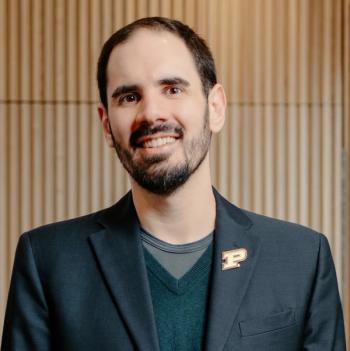
Brandon E. Boor is the Dr. Margery E. Hoffman Associate Professor in the Lyles School of Civil and Construction Engineering at Purdue University. | Photo Credit: © Brandon Boor.
In the second part of our interview with Brandon Boor of Purdue University, he discusses how his team controls experimental variables during cleaning experiments in order to obtain interpretable data.
Scientist With Portable Spectrometer in Natural Field Setting ©  By Tika -chronicles-stock.adobe.com
The bulky bench-top NIR spectrometer is quietly being dismantled and rebuilt as a wafer-scale photonic chip, a self-calibrating algorithm, and a sensor small enough to ride in a shirt pocket. What once demanded a grating, a moving mirror, and a climate-controlled lab now fits inside a handheld module, a bioreactor probe, or a drone payload, and it increasingly figures out what it is looking at on its own.