Modular Raman imaging microscopes provide a toolset
for configuring experiments that can integrate complementary methods and evolve along with individual requirements.
Following an introduction to the theoretical background, Dr. Ievgeniia Iermak will describe several of its variations
including 3D Raman imaging and optical profilometry-guided measurements. Examples will be provided to demonstrate Raman imaging’s chemical sensitivity, high resolution, ease of use, and versatility for pharmaceutical research.
Raman microspectroscopy can be used to characterize polycyclic aromatic hydrocarbons. Pavi Sundararajan, a postdoctoral fellow at NASA Ames Research Center, explains how.
The launch of SpecAcademy is set to solve some of the current education gaps in analytical spectroscopy. We preview an upcoming roundtable discussion with some of SpecAcademy’s instructors here.
The following articles are the most accessed digital object identifier (DOI) manuscripts for Spectroscopy and LCGC International during the month of August 2026. Ten articles are individually ranked here by DOI page views.
This interactive e-book celebrates National Forensic Science Week by highlighting the vital role of spectroscopy in modern criminal investigations and emphasizing how technological innovation is making forensic analysis faster, safer, and more reliable for courtroom testimony.
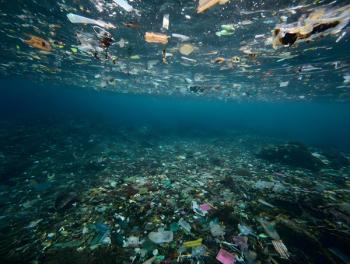
An upcoming talk at SciX 2026 Conference will describe a new multimodal platform using laser ablation inductively coupled plasma–mass spectrometry (LA-ICP-MS) elemental mapping that can detect nanoparticles and microplastics in biological tissue.
Top content published this week include a feature article on a new innovation called the Personalized Optical Digital Twin (PODT), a recap of the International Conference on Raman Spectroscopy (ICORS) 2026 show, and a Q&A on measuring nanoparticle formation in indoor air.
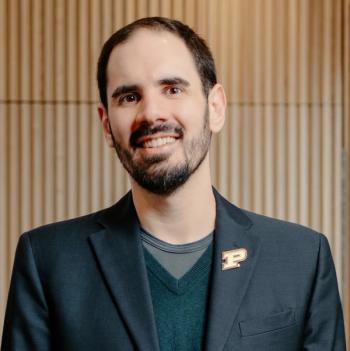
In the final part of our conversation with Brandon Boor of Purdue University, he explains the respiratory deposition model his team used to analyze indoor particle exposure.
In the second part of our interview with Brandon Boor of Purdue University, he discusses how his team controls experimental variables during cleaning experiments in order to obtain interpretable data.