Cement is one of the most important materials for construction. ASTM C114-11 covers chemical analysis of hydraulic cement. XRF spectrometry is used for chemical composition analysis of cement due to its simple sample preparation and high precision. This application note demonstrates quantitative analysis for Portland cement by the pressed powder method according to ASTM C114-11 on the Rigaku Supermini200, a benchtop sequential wavelength dispersive XRF spectrometer.
John Philip Walters, Ph.D. (1938-2026), was an analytical chemist who spent 17 years researching the physics of spark-discharge emission spectroscopy at the University of Wisconsin-Madison before moving to St. Olaf College in 1982, where he became best known for pioneering a role-playing undergraduate laboratory model that had students take on professional roles to mirror real analytical-chemistry work. His 1991 three-part series on the approach in Analytical Chemistry earned him the ACS Division of Analytical Chemistry's J. Calvin Giddings Award in 1993, and he continued extending his understand-the-system teaching philosophy into computer-controlled instrumentation well into his later career.
Top content published this week include a new article on bioprocess monitoring, a new “Chemometrics in Spectroscopy” column, and an overview of the latest advancements in laser-induced breakdown spectroscopy (LIBS).
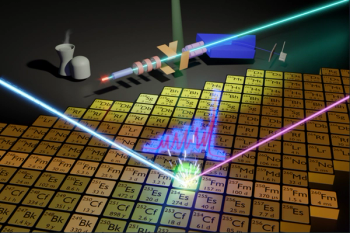
A new laser-based spectroscopic method, developed by researchers at the University of Gothenburg and an EU-funded collaboration, has produced the first high-resolution nuclear-shape measurements of the radioactive actinides fermium and neptunium.