

Researchers in Bangladesh have developed a rapid, non-destructive method to detect honey adulteration using UV-Vis-NIR spectroscopy paired with machine learning. Their findings could protect consumers and support food quality enforcement.

Jerome Workman, Jr. is former Senior Technical Editor of LCGC. He is on the Editorial Advisory Board of Spectroscopy and is the current Assoc. Editorial Director. He is the co-host of the Analytically Speaking podcast and has published multiple reference text volumes, including the three-volume Academic Press Handbook of Organic Compounds, the five-volume The Concise Handbook of Analytical Spectroscopy, the 2nd edition of Practical Guide and Spectral Atlas for Interpretive Near-Infrared Spectroscopy, the 2nd edition of Chemometrics in Spectroscopy, and the 4th edition of The Handbook of Near-Infrared Analysis. He is the recipient of the 2020 NY/NJ SAS Gold Medal Award (with Howard L. Mark). Mark and Workman have written over 250 Statistics and Chemometrics columns for Spectroscopy. Direct correspondence to [email protected]
Researchers in Bangladesh have developed a rapid, non-destructive method to detect honey adulteration using UV-Vis-NIR spectroscopy paired with machine learning. Their findings could protect consumers and support food quality enforcement.

This tutorial introduces how NIR spectroscopy works for honey analysis, explores practical workflows, discusses real-world applications, and outlines best practices for implementing this technique in food labs.

Mississippi State University researchers show that mid-infrared (MIR), a.k.a. infrared (IR), portable spectrometers, combined with calibration transfer techniques, can match lab instruments for soil property analysis.

German researchers have demonstrated a portable Raman laser system that analyzes soil composition directly in agricultural fields, offering precise, real-time data for precision farming.

Spectroscopy's 2025 Emerging Leader in Molecular Spectroscopy is Lingyan Shi of the University of California, San Diego. Shi’s research focuses on developing and applying molecular imaging tools, including stimulated Raman scattering (SRS), multiphoton fluorescence (MPF), fluorescence lifetime imaging (FLIM), and second harmonic generation (SHG) microscopy.

A team from the University of Cordoba demonstrated that a portable near-infrared spectral sensor can accurately assess olive oil quality, offering a practical, low-cost alternative to laboratory methods.
This tutorial addresses the critical issue of analyte specificity in multivariate spectroscopy using the concept of Net Analyte Signal (NAS). NAS allows chemometricians to isolate the portion of the signal that is unique to the analyte of interest, thereby enhancing model interpretability and robustness in the presence of interfering species. While this tutorial introduces the foundational concepts for beginners, it also includes selected advanced topics to bridge toward expert-level applications and future research. The tutorial covers the mathematical foundation of NAS, its application in regression models like partial least squares (PLS), and emerging methods to optimize specificity and variable selection. Applications in pharmaceuticals, clinical diagnostics, and industrial process control are also discussed.

Irish researchers have developed a lightning-fast, label-free spectroscopic imaging method capable of classifying immune cells in just 5 milliseconds. Their work with broadband coherent anti-Stokes Raman scattering (BCARS) pushes the boundaries of cellular analysis, potentially transforming diagnostics and flow cytometry.

Chinese researchers have developed a cutting-edge cervical cancer diagnostic model that combines spontaneous Raman spectroscopy, CARS imaging, and artificial intelligence to achieve 100% accuracy in distinguishing healthy and cancerous tissue.

A new comparative study shows that scientific CMOS (sCMOS) cameras could rival traditional CCD detectors in certain Raman CARS spectroscopy applications, offering faster readout and dynamic range despite slightly higher noise levels.
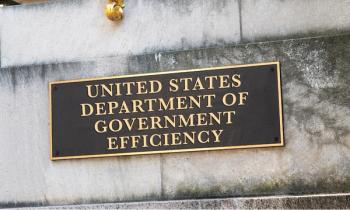
DOGE-related federal funding cuts have sharply reduced salaries, lab budgets, and graduate support in academia. Researchers view the politically driven shifts in priorities as part of recurring systemic issues in U.S. science funding during administrative transitions. The impact on Federal laboratories has varied, with some seeing immediate effects and others experiencing more gradual effects. In general, there is rising uncertainty over future appropriations. Sustainable recovery may require structural reforms, leaner administration, and stronger industry-academia collaboration. New commentary underscores similar challenges, noting scaled-back graduate admissions, spending freezes, and a pervasive sense of overwhelming stress among faculty, students, and staff. This article addresses these issues for the analytical chemistry community.

Researchers in Scotland have developed a drone-mounted infrared imaging system that can detect and map methane gas leaks in real time from up to 13.6 meters away. The innovative approach combines laser spectroscopy with infrared imaging, offering a safer and more efficient tool for monitoring pipeline leaks and greenhouse gas emissions.
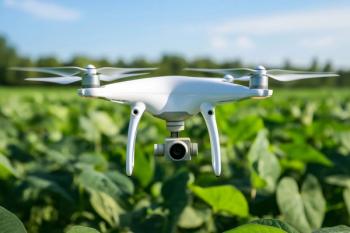
Researchers in Northeast China have demonstrated a new approach using drone-mounted multispectral imaging to monitor and predict soybean bacterial blight disease, offering a promising tool for early detection and yield protection.

A Virginia Tech study has combined drone-mounted NIR hyperspectral imaging (400 nm to 1100 nm) and AI to estimate soil moisture at root depths with remarkable accuracy, paving the way for smarter irrigation and resilient farming.

Researchers from Shanghai Jiao Tong University are harnessing artificial intelligence to elevate surface-enhanced Raman spectroscopy (SERS) for highly sensitive, multiplexed biomedical analysis, enabling faster diagnostics, imaging, and personalized treatments.

A new review led by researchers from MIT and Oak Ridge National Laboratory outlines how artificial intelligence (AI) is transforming the study of molecular vibrations and phonons, making spectroscopic analysis faster, more accurate, and more accessible.

Researchers from Chinese universities have developed an AI-powered platform that combines near-infrared (NIR) and Raman spectroscopy for real-time monitoring and control of antibiotic production, boosting efficiency by over 30%.
This tutorial examines the modeling of diffuse reflectance (DR) in complex particulate samples, such as powders and granular solids. Traditional theoretical frameworks like empirical absorbance, Kubelka-Munk, radiative transfer theory (RTT), and the Hapke model are presented in standard and matrix notation where applicable. Their advantages and limitations are highlighted, particularly for heterogeneous particle size distributions and real-world variations in the optical properties of particulate samples. Hybrid and emerging computational strategies, including Monte Carlo methods, full-wave numerical solvers, and machine learning (ML) models, are evaluated for their potential to produce more generalizable prediction models.

A team of researchers from Spanish institutions has found that polystyrene used in healthcare packaging shows strong resistance to UVC sterilization, with minimal chemical degradation detected using FT-IR and Raman spectroscopy.

A multinational research team explores Raman spectroscopy's expanding role in medicine and microbiology, revealing its powerful potential in diagnostics, drug analysis, and microbial classification.

Researchers at Georgia College and Purdue University have developed a fast, low-cost method using Raman and UV–visible spectroscopy combined with chemometric modeling to accurately screen and quantify active ingredients in over-the-counter oral syrups, helping to fight counterfeit medications.

The recipient of the 2025 NYSAS Gold Medal Award is Geraldine L. Richmond, Presidential Chair in Science and Professor of Chemistry at the University of Oregon.

A new study reveals how changes in refractive index can skew transient absorption data in thin-film materials, leading to misinterpretations unless properly corrected.
Researchers in Brazil have developed new optical techniques—SLIM, IC-scan, and RICO-scan—to probe the complex nonlinear properties of scattering and disordered materials, expanding potential applications in photonics, biomedicine, and thermometry.
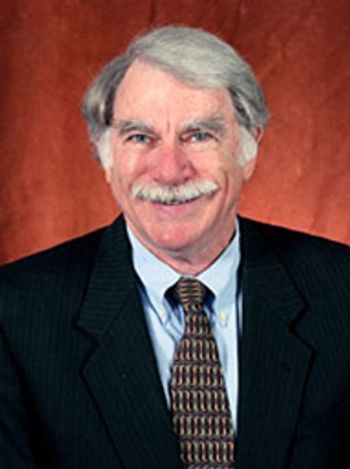
A pioneer of FT-ICR Mass Spectrometry, Alan G. Marshall (1944–2025), is best known for co-inventing Fourier transform ion cyclotron resonance mass spectrometry (FT-ICR MS), a transformative technique that enabled ultrahigh-resolution analysis of complex mixtures. Over a career spanning more than five decades at institutions like the University of British Columbia, The Ohio State University, and Florida State University, he published over 650 peer-reviewed papers and mentored more than 150 scientists. Marshall’s work profoundly impacted fields ranging from astrobiology to petroleomics and earned him numerous prestigious awards and fellowships. Revered for his intellect, mentorship, and dedication to science, he leaves behind a legacy that continues to shape modern mass spectrometry.
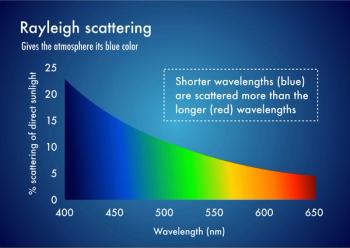
Researchers have introduced a simple yet powerful new rule based on Rayleigh scattering theory that accurately links the absorption behavior of composite media, like aerosols or colloids, to the properties of their nanoparticle constituents.

Chinese researchers have developed a powerful new method using near-infrared (NIR) hyperspectral imaging combined with a convolutional neural network (CNN) to identify hazardous explosive materials, like trinitrotoluene (TNT) and ammonium nitrate, from a distance, even when concealed by clothing or packaging.

Researchers have developed an analytical method combining remote near-infrared and Raman spectroscopy with machine learning to noninvasively map moisture and salt damage in historic buildings, offering critical insight into ongoing structural deterioration.
Researchers in Thailand have developed a cost-effective standoff Raman spectroscopy system using a night-vision intensified spectrometer and digital correction algorithms. The system reliably detects chemical compounds at distances up to 60 meters with high spectral resolution.

Explore the evolution of chemometrics in spectroscopy, celebrating 40 years of insights and mathematical exploration in this dynamic field.